
Mastering the Art of Cartoon Furniture: How To Draw A Cartoon Chair
In the realm of visual arts, simplicity often reigns supreme. The ability to distill complex objects into their most fundamental forms is a hallmark of skilled illustration. Today, we delve into the art of drawing a cartoon chair, a quintessential element for any aspiring artist seeking to populate their animated worlds with charming, recognizable objects. While it may seem a straightforward task, the nuance lies in capturing the essence of a chair – its function, its comfort, and its whimsical potential – through a few well-placed lines.
Understanding the Fundamentals: Shapes and Proportions
Breaking Down the Chair into Basic Shapes
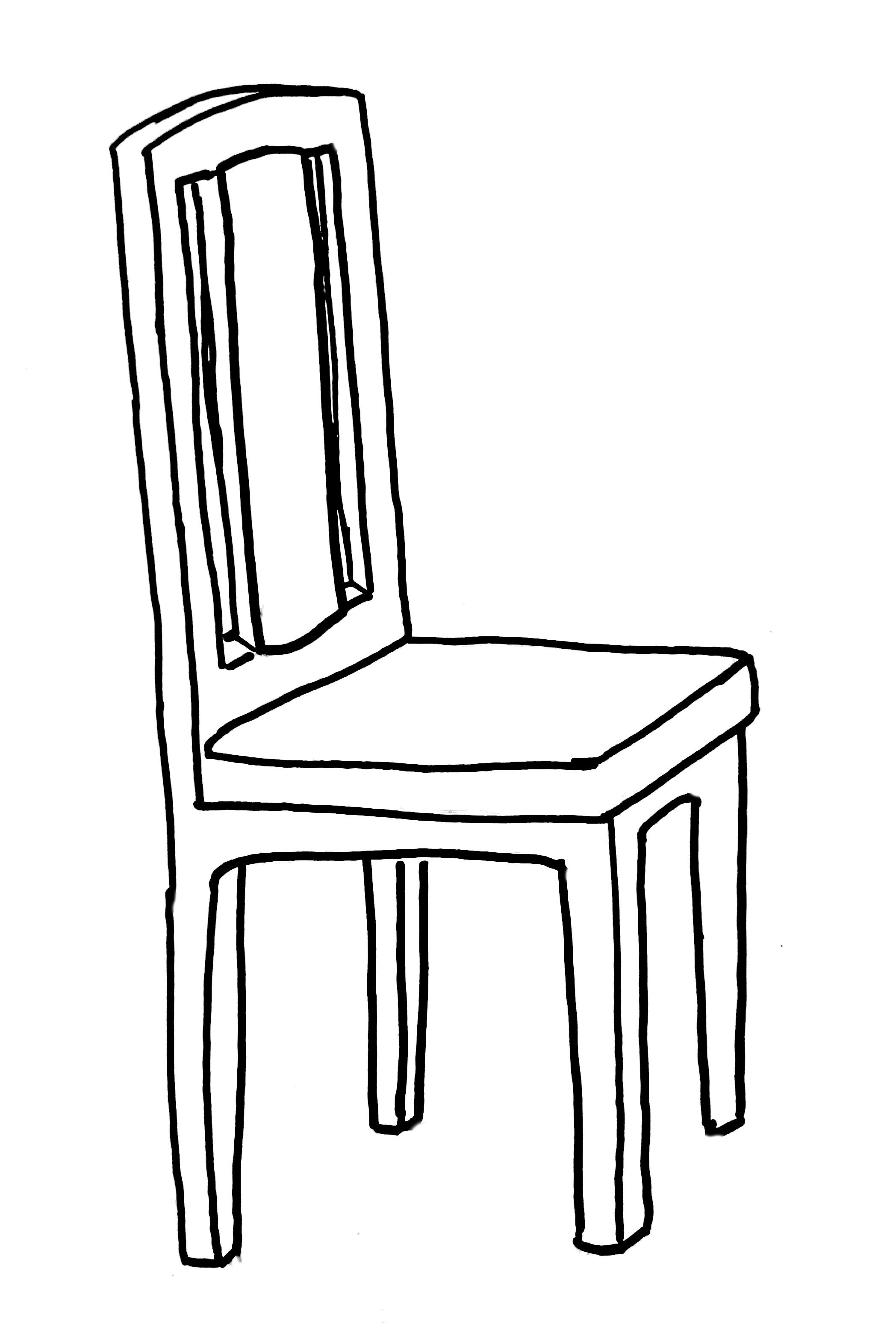
The foundation of any good cartoon drawing rests on the understanding of basic geometric shapes. A chair, in its most simplified form, can be represented by a combination of rectangles, squares, and possibly a few rounded edges. Begin by visualizing the chair as a series of these shapes, establishing the overall structure. Imagine the seat as a rectangle, the backrest as another, and the legs as elongated rectangles or squares. This initial step is crucial for establishing the correct proportions and ensuring a balanced composition.
Proportions are paramount in cartooning. Exaggeration is encouraged, but it must be controlled. A chair with legs too short will appear stunted, while a backrest too tall may seem disproportionate. Aim for a harmonious balance, ensuring that each component complements the others. Consider the style you wish to adopt; a more rounded, plush chair will require softer, less rigid shapes, while a more angular design will necessitate sharper lines and more defined corners.
Don't be afraid to experiment with different shapes and sizes. A cartoon chair can take on various forms, from a simple, straight-backed kitchen chair to a more elaborate, ornate throne. The key is to maintain consistency within your chosen style. Once you've established the basic shapes, you can begin to refine the details, adding curves, contours, and other embellishments to bring your chair to life.
Remember, practice makes perfect. Don't be discouraged if your first attempts don't meet your expectations. The more you practice, the better you'll become at recognizing and manipulating basic shapes to create compelling cartoon drawings. Each sketch is a stepping stone, a lesson learned, and a step closer to mastering the art of cartoon furniture.
Adding Personality: Style and Detail
Infusing Character into Your Cartoon Chair
A cartoon chair isn't just an object; it's a character in its own right. The style you choose will dictate the personality of your chair, from its demeanor to its perceived comfort. Consider the environment in which your chair will reside. A chair in a royal court might be adorned with intricate details and regal embellishments, while a chair in a cozy cottage might be simple and rustic. The context is key to infusing character and authenticity.
Details are the lifeblood of cartooning. A few well-placed lines can transform a simple shape into a dynamic, expressive object. Add cushions, armrests, or even a small decorative element to personalize your chair. Consider the texture of the material; a plush, velvety cushion will require different shading and line work than a hard, wooden surface. Think about how the chair would be used, and add details accordingly.
Exaggeration is a powerful tool in cartooning. Don't be afraid to push the boundaries of reality, exaggerating certain features to create a more comical or dramatic effect. A chair with comically large legs or an excessively tall backrest can add a touch of whimsy to your drawing. However, remember to maintain a sense of balance and proportion, ensuring that the exaggeration serves the overall composition rather than detracting from it.
Remember that even a simple chair can tell a story. A worn, slightly lopsided chair might suggest a long history and a comfortable familiarity, while a pristine, perfectly symmetrical chair might evoke a sense of formality and elegance. Let your imagination guide you, and allow your chair to express its unique personality through its design and details.
Techniques and Tools: Bringing Your Chair to Life
Utilizing Lines and Shading for Depth
The quality of your lines can significantly impact the overall appearance of your cartoon chair. Varying line thickness can create a sense of depth and dimension, highlighting certain features and receding others. Thicker lines can emphasize the outline of the chair, while thinner lines can be used to add subtle details and shading. Experiment with different line weights to achieve the desired effect.
Shading is another essential technique for adding depth and realism to your drawing. Consider the light source and how it interacts with the chair. Use shading to create shadows and highlights, emphasizing the contours and curves of the chair. A well-shaded chair will appear three-dimensional and more visually engaging. Start with light shading, gradually building up the intensity to create a sense of depth and volume. Remember that less is often more; subtle shading can be more effective than heavy, overbearing shading.
The tools you use can also influence the outcome of your drawing. Whether you prefer traditional pencils and paper or digital drawing software, choose tools that feel comfortable and intuitive. Experiment with different brushes, pens, and pencils to find those that best suit your style. Digital tools offer a wide range of options, from adjustable brush sizes to layers and color palettes, allowing for greater flexibility and control.
Consider using reference images to guide your drawing. Observe real chairs, noting their shapes, proportions, and details. Reference images can provide valuable insights and inspiration, helping you to create more accurate and compelling cartoon chairs. However, don't simply copy the reference; use it as a guide, interpreting and adapting it to fit your own unique style and vision.
Perspective and Composition: Placing Your Chair in Context
Creating Dynamic Scenes with Proper Perspective
Perspective is crucial for placing your cartoon chair in a realistic or believable environment. Understanding basic perspective principles, such as vanishing points and horizon lines, can help you to create depth and dimension in your drawings. Consider the angle from which you are viewing the chair; a chair viewed from above will appear different than a chair viewed from below or from the side. Perspective adds realism to a sketch, and also helps to create a scene.
Composition refers to the arrangement of elements within your drawing. A well-composed drawing will be visually appealing and balanced. Consider the placement of your chair within the frame, ensuring that it is not too crowded or too isolated. Use the rule of thirds or other compositional guidelines to create a more dynamic and engaging composition. Consider adding other items near the chair to give context to where the chair is located.
Adding a background can significantly enhance the impact of your cartoon chair. A simple background, such as a wall or a floor, can provide context and depth. A more elaborate background, such as a room or a landscape, can create a more immersive and engaging scene. Consider the lighting in your scene, ensuring that it complements the shading on your chair. A well-lit scene will enhance the overall realism and atmosphere of your drawing.
Don't be afraid to experiment with different compositions and perspectives. Try different angles and arrangements to find the most visually compelling presentation. Remember that composition is not just about placing objects; it's about creating a visual narrative, guiding the viewer's eye and telling a story through your drawing.
Practice and Refinement: Perfecting Your Technique
Consistent Practice for Continuous Improvement
Like any skill, drawing a cartoon chair requires consistent practice. Set aside time each day or week to practice your drawing skills. Experiment with different styles, techniques, and compositions. The more you practice, the more comfortable and confident you'll become in your abilities. Practice drawing different types of chairs, from simple stools to elaborate armchairs. Each drawing will be an opportunity to learn and refine your technique.
Seek feedback from others, whether it's from friends, family, or online communities. Constructive criticism can provide valuable insights and help you to identify areas for improvement. Don't be afraid to share your work and ask for feedback. Remember that feedback is not personal; it's an opportunity to grow and learn. Consider joining online art communities or taking a drawing class to further enhance your skills.
Study the work of other artists, both classic and contemporary. Observe their techniques, styles, and compositions. Analyze how they use lines, shading, and perspective to create compelling drawings. Inspiration can come from unexpected places; look for it in books, magazines, movies, and even everyday objects. Let the work of other artists inspire you to explore new possibilities and push the boundaries of your own creativity.
Don't be afraid to make mistakes. Mistakes are a natural part of the learning process. Embrace them as opportunities to learn and grow. Each mistake is a lesson learned, a step closer to mastering the art of drawing a cartoon chair. Remember that even the most skilled artists make mistakes; it's how they learn from them that sets them apart.
FAQ: Cartoon Chair Drawing
Q: What are the basic shapes I should start with?
A: Start with rectangles and squares for the seat, backrest, and legs. You can then round the edges or add

How To Draw A Chair Really Easy Drawing Tutorial

Lawn Chair Drawing At Getdrawings Free Download

Draw A Chair

Furniture Clipart Black And White Clip Art Library

How To Draw A Chair Really Easy Drawing Tutorial


No comments:
Post a Comment