
Demystifying Script Format: A Comprehensive Guide for Writers
Understanding the Fundamentals
Ever found yourself staring at a blank page, wondering how to translate the vibrant movie playing in your head into a readable script? You're not alone. Script formatting, while seemingly arcane, is a crucial skill for any aspiring screenwriter, playwright, or even content creator. It's the language that communicates your vision to actors, directors, and production teams. Think of it as a blueprint for your story, ensuring everyone is on the same page, literally. It's not just about dialogue; it's about visual cues, pacing, and the overall flow of your narrative. We're here to guide you through this process, making it less daunting and more, well, delightful.
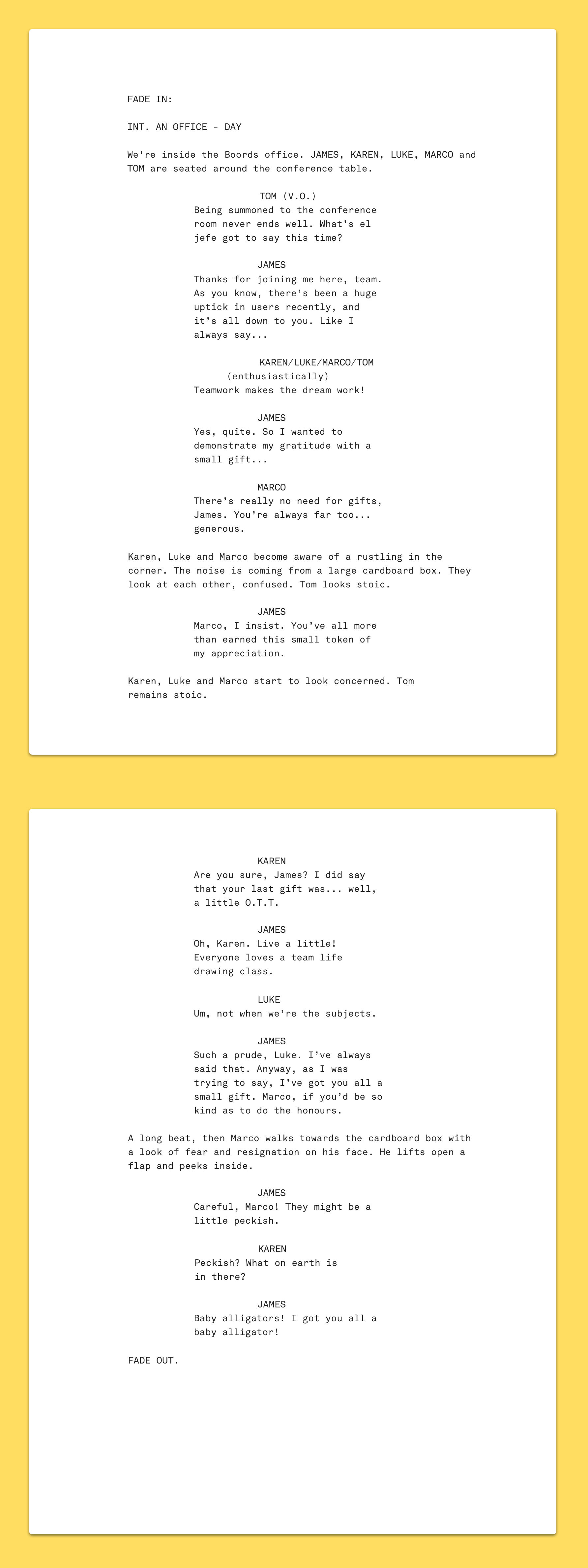
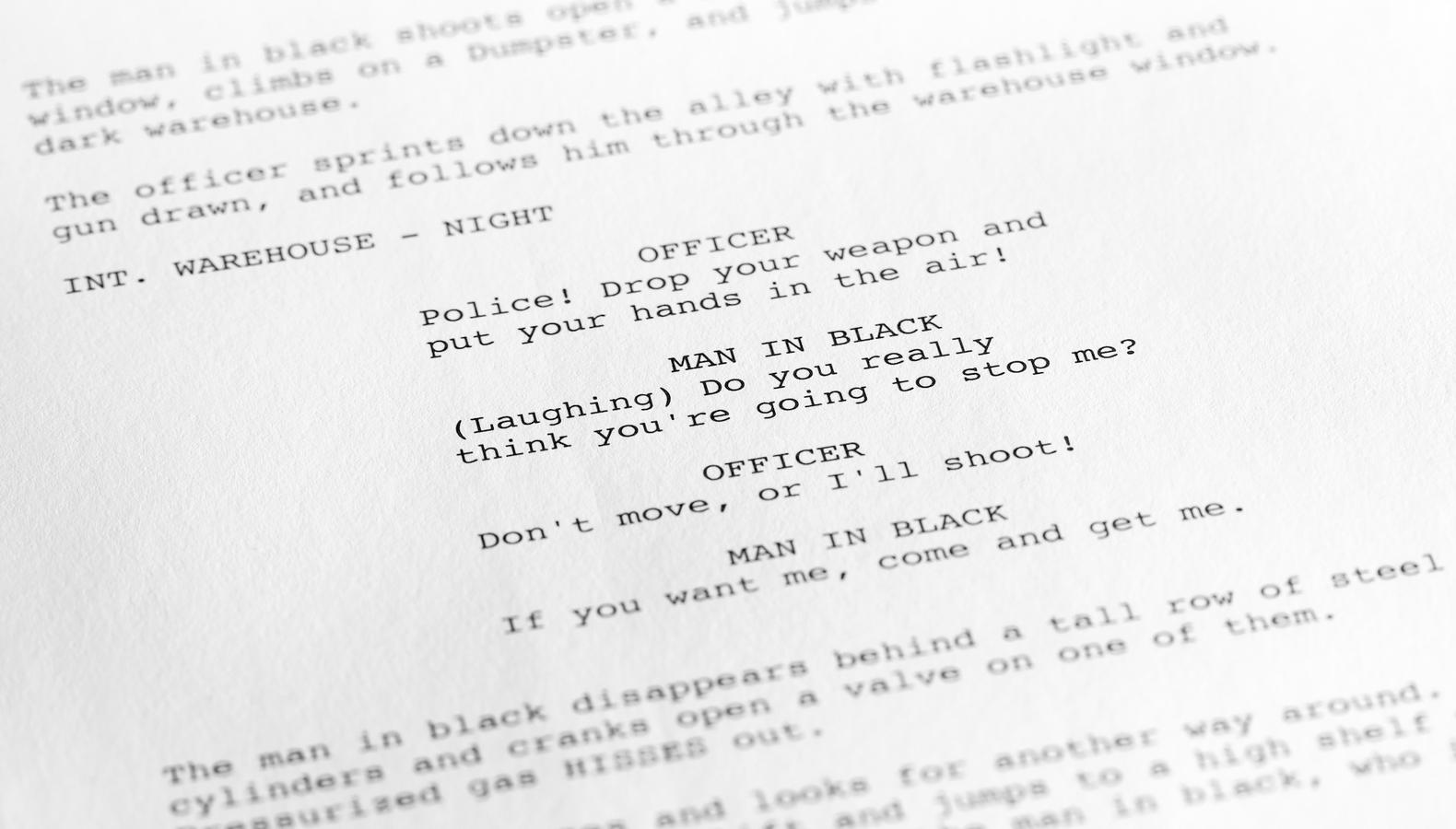
The standard script format, often referred to as "Hollywood standard," is designed for clarity and efficiency. It uses specific conventions for elements like scene headings, character names, dialogue, and action descriptions. These conventions are not arbitrary; they have evolved over decades to facilitate smooth production workflows. Imagine trying to direct a scene where the action is buried in a dense paragraph of prose – chaos! Proper formatting eliminates ambiguity and allows everyone to focus on their respective roles. It’s a bit like a secret handshake in the creative world.
One of the first things you'll encounter is the use of Courier New 12pt font. This isn't just a stylistic choice; it's about page count. Each page of a properly formatted script roughly translates to one minute of screen time. This consistency is essential for budgeting and scheduling. So, resist the urge to use that fancy script font you found online; stick to the classics. You'll thank us later when your script isn't rejected for being improperly formatted.
Beyond the font, you'll need to understand the margins and spacing. Scene headings, action lines, character names, and dialogue all have specific placements on the page. These rules ensure readability and consistency. It might feel a bit rigid at first, but once you get the hang of it, you'll appreciate the structure. It’s like learning the rules of a complex board game; once you know them, you can truly play.
Breaking Down the Essential Elements
Scene Headings and Action Lines
Scene headings, also known as sluglines, are the bread and butter of your script. They tell the reader where and when a scene takes place. They're always in all caps and follow a specific format: INT. or EXT. (for interior or exterior), followed by the location, and then the time of day. For example, "INT. COFFEE SHOP - DAY." This simple line sets the stage for everything that follows. It's the GPS coordinates of your story.
Action lines are where you describe what's happening on screen. They should be concise and vivid, painting a clear picture for the reader. Avoid overly flowery language; stick to the essentials. Imagine you're directing a silent film; you need to convey the action through visuals alone. Think about the key actions that drive the scene forward. Does a character slam a door? Does a car screech to a halt? These details bring your story to life.
Remember, action lines are not just for describing physical actions. They also convey emotions and atmosphere. A simple phrase like, "She nervously fidgets with her keys," can reveal a character's inner state without resorting to lengthy monologues. Show, don't tell. This mantra is crucial in screenwriting. Let the visuals and actions speak for themselves.
When writing action lines, think about pacing. Short, punchy sentences create a sense of urgency, while longer, more descriptive sentences can slow down the pace and create a more contemplative mood. Use sentence structure to control the rhythm of your story. It's like conducting an orchestra; you're orchestrating the flow of information.
Character Names and Dialogue: The Heart of the Story
Crafting Engaging Conversations
Character names are always in all caps and centered above their dialogue. This makes it easy for actors to quickly find their lines. Dialogue itself should be natural and authentic, reflecting the way people actually speak. Avoid overly formal or stilted language. Listen to real conversations and pay attention to the rhythms and nuances of speech. It’s like being a linguistic anthropologist, studying the way people communicate.
When writing dialogue, consider each character's voice. What are their unique speech patterns, vocabulary, and quirks? Each character should sound distinct. Dialogue is not just about conveying information; it's about revealing character. It should advance the plot, reveal relationships, and create conflict. It’s a verbal dance, a constant push and pull.
Remember, less is often more. Avoid long, expository monologues. Instead, use concise, impactful lines to convey your message. Subtext is your friend. What is left unsaid is often more powerful than what is said. Let characters communicate through glances, gestures, and subtle shifts in tone. It’s the unspoken language of human interaction.
Dialogue should also serve a purpose. Every line should contribute to the story in some way. If a line doesn't advance the plot, reveal character, or create conflict, it should be cut. Be ruthless in your editing. It’s like pruning a garden; you need to remove the dead branches to allow the healthy ones to flourish.
Transitions and Parentheticals: Adding Nuance
Guiding the Reader's Eye
Transitions, like CUT TO:, DISSOLVE TO:, or FADE IN:, are used to indicate changes in scene or time. While these were more common in older scripts, they are now often omitted, as editing software can handle these transitions seamlessly. However, they can still be useful for emphasizing significant shifts in the narrative. Think of them as signposts, guiding the reader through the landscape of your story.
Parentheticals, or wrylies, are brief descriptions placed in parentheses below a character's name and before their dialogue. They indicate how a line should be delivered, such as (angrily) or (sarcastically). Use them sparingly, as they can be distracting. Trust your actors to bring their own interpretations to the material. However, they can be useful for clarifying ambiguous lines or indicating specific emotional states. It’s like adding a subtle flavor to a dish; a little goes a long way.
When using parentheticals, be specific and concise. Avoid overly descriptive phrases. Instead, focus on the key emotion or intention. For example, instead of (with a hint of sadness and a touch of regret), simply use (sadly). Clarity is key. It’s like giving instructions to a robot; you need to be precise.
Transitions can also be used to create a sense of rhythm and pacing. A quick CUT TO: can create a sense of urgency, while a slow DISSOLVE TO: can create a more dreamlike atmosphere. Experiment with different transitions to find the right tone for your story. It’s like playing with the tempo of a song; you’re controlling the emotional impact.
Software and Resources: Tools of the Trade
Streamlining Your Writing Process
Several software programs are designed specifically for screenwriting, such as Final Draft, Celtx, and WriterDuet. These programs automatically format your script according to industry standards, saving you time and effort. They also offer features like outlining tools, collaboration tools, and revision tracking. It’s like having a personal assistant for your writing.
Online resources, such as screenwriting blogs, forums, and tutorials, can also be invaluable. These resources offer tips and advice from experienced screenwriters and industry professionals. They can help you stay up-to-date on the latest trends and techniques. It’s like having a mentor in your pocket.
Don't forget the importance of reading and analyzing successful scripts. Study the work of your favorite screenwriters and pay attention to how they use formatting, dialogue, and action lines. This will help you develop your own style and improve your craft. It’s like learning from the masters; you’re absorbing their techniques and applying them to your own work.
Also, utilize online script libraries. Many websites offer free access to screenplays of popular films and TV shows. These are excellent resources for studying formatting and structure. It's like having a library of blueprints at your fingertips.
FAQ: Common Queries Answered
Your Script Format Questions, Solved
Q: Do I really have to use Courier New 12pt?
A: Yes, if you want your script to be taken seriously. It’s an industry standard for a reason. It ensures consistency and accurate page counts.
Q: How do I indicate a character's voiceover?
A: Use (V.O.) after the character's name. For example, CHARACTER NAME (V.O.).
Q: What if I have a montage sequence?
A: Use the MONTAGE heading, followed by a series of short action lines describing each scene in the montage.

Free 8+ Sample Script Writing Templates In Pdf Ms Word

Script Format Template
How To Write A Script (stepbystep Guide) Boords

How To Write A Graphic Novel Script Format / The Official Scbwi Blog

How To Write Movie Scripts (with Examples) Wikihow


No comments:
Post a Comment